


London’s dense urban environment creates particularly favourable conditions. Millions of people live in relatively close proximity. Many properties share walls or floors and an extensive network of drains, service ducts and other hidden spaces that connect buildings together.
Mice are one of the most common pests encountered in London homes and businesses. From terraced houses in East London to high-rise flats in central boroughs, house mice have plenty of opportunities to find food, warmth and shelter.
For homeowners, tenants, landlords and businesses, this means a mouse problem can develop surprisingly quickly once rodents find a reliable source of food and a sheltered place to nest.
Mice Are Widespread Across the Capital
There is no single official figure for the number of mice inhabiting London, and council pest-control records cannot be used to produce a reliable estimate of the city’s mouse population.
What we can say is that mice are prolific across the city. Local authorities receive pest-related reports from residential properties, commercial premises and communal buildings. However, private pest control companies deal with many additional infestations that never appear in council statistics.
The problem also varies considerably between neighbourhoods. Boroughs with large numbers of older terraced properties, flats, multiple occupancy buildings, restaurants and densely populated residential areas can provide particularly good conditions for mice.
That means a mouse infestation is possible whether you live in a Victorian terrace in Hackney, a flat in Tower Hamlets, a suburban house in Redbridge or a commercial property in Westminster.

Why Are There So Many Mice in London?
London provides mice with virtually everything mice are attracted to and what they need to thrive. Food is readily available from homes, restaurants, takeaway businesses, rubbish areas, communal bins and poorly secured food waste. Buildings provide warmth throughout the year, while walls, floors, lofts and service voids offer sheltered nesting sites.
The capital’s enormous housing stock also plays a role. London contains millions of homes ranging from historic properties to modern apartment developments. Older buildings can have numerous gaps around pipes, floorboards, roofs and walls, while newer blocks can contain extensive service ducts that rodents can travel through.
Which London Areas Are Most at Risk?
Mouse infestations can occur anywhere, but certain characteristics make some properties more vulnerable.
Central and inner London boroughs have some of the highest population densities in the country. Areas such as Westminster, Camden, Islington, Hackney, Tower Hamlets and Southwark contain large numbers of flats, apartments, restaurants and other premises where food and shelter are readily available.
Outer London has a different risk profile. Boroughs such as Redbridge, Barking and Dagenham, Newham, Ealing and Haringey contain substantial numbers of terraced and semi-detached properties, gardens, garages and loft spaces.
The important point is that mice are not confined to any particular part of London. Their presence reflects the availability of food, shelter and access rather than the perceived social status or property value of a neighbourhood.

It‘s a common misconception that mice only enter untidy or unhygienic properties. However, one of the less well known facts about mice is that they need surprisingly little food to survive. Crumbs under kitchen appliances, an open packet of cereal, pet food, normal food waste or even spilled bird seed can provide an opportunity. A clean home can therefore still experience an infestation once mice have found their way inside. Good housekeeping helps reduce the available food supply, but it cannot compensate for holes or gaps that allow mice into the building.
How Do Mice Get into London Homes?
A mouse can squeeze through a remarkably small opening. An adult house mouse can pass through a gap of around 6mm, roughly the diameter of a pencil. This makes what seem like minor defects around a property surprisingly important.
Common entry points include:
- Gaps around pipes and cables
- Cracks in walls and brickwork
- Gaps under doors
- Air vents
- Damaged drains
- Spaces underneath kitchen units
- Openings around boilers and heating pipes
- Gaps between adjoining properties
In terraced houses and flats, mice may also move from one property to another through shared walls, floors, ceilings and loft spaces. Apartment living creates particular challenges because a mouse problem may not originate in the property where the first mouse is spotted. A resident may deal with the signs inside their own flat while rodents continue to gain access from another part of the building. This is why recurring mouse activity in flats should be investigated carefully. Sealing obvious holes inside one property may help, but the wider building may also need to be considered.
London’s older properties can be particularly vulnerable. Much of London’s housing stock is decades or even centuries old. Victorian and Edwardian terraces are common across areas of East, West, South and North London.
Cold Weather Brings Mice Indoors
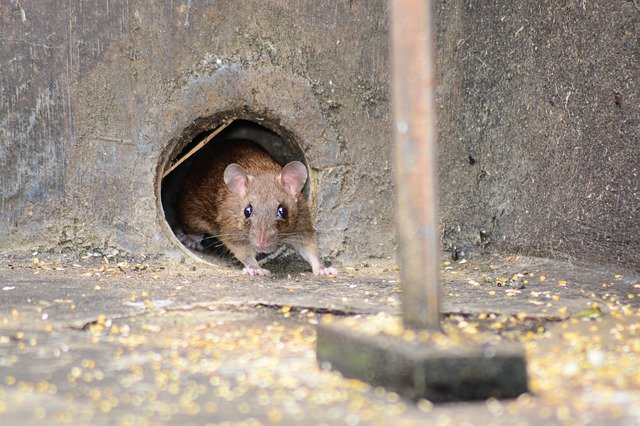
Even though mice can remain active throughout the year, colder weather often increases the likelihood of them seeking shelter inside buildings. A loft, wall cavity or kitchen provide considerably better conditions than an exposed outdoor environment. Once inside, mice have access to stable temperatures and nesting materials. This is why mouse problems often become particularly noticeable during autumn and winter. However, finding mice in a property during summer doesn’t mean they have only just arrived. A population may have been living inside the building for some time.
Over time, buildings settle and materials deteriorate. Pipework is replaced, extensions are added and cables are installed, creating new gaps and openings that were not there when the property was built. A mouse doesn‘t need a large hole in the wall. A small gap around a pipe passing through a kitchen cabinet can be enough to provide access to a warm interior.
How Quickly Can a Mouse Infestation Grow?
Female house mice can begin breeding when they are only a few months old. They typically produce around 4–8 young per litter and can have several litters during a year. Under favourable indoor conditions, breeding can continue throughout the year, allowing an infestation to increase surprisingly quickly. This means a small population can increase rapidly under the right circumstances.
The actual rate of growth varies considerably depending on temperature, food availability, competition, and other conditions. Claims that a single pair will inevitably produce thousands of mice within a year are somewhat misleading. However, there is no doubt that an established indoor population can expand quickly.
Mice Can Cause More Than Just a Nuisance
Mice contaminate the environment as they move around. They can leave droppings and urine in cupboards, and around food storage areas and surfaces, creating health risks and hygiene issues.

They can also gnaw on various materials, including insulation, wood, plastic and electrical cables. Damaged wiring is particularly concerning because it can cause a potential fire hazard.
For businesses, the consequences can be even more serious. Restaurants, cafés, food retailers, hotels and businesses like pubs have hygiene obligations to meet. This makes finding evidence of rodents a matter requiring prompt attention.
What Are the Signs Of Mice?
You don’t necessarily need to see a mouse to know one is present.
Look for:
- Small dark droppings
- Gnaw marks on food packaging
- Scratching noises, particularly at night
- Shredded paper, cardboard or insulation
- Greasy marks along walls or skirting boards
- A distinctive stale or musky smell
- Food being disturbed or disappearing
Droppings are often found inside kitchen cupboards, underneath the sink, behind appliances and along the edges of a room.
What Should You Do If You See a Mouse?
There are several straightforward measures London homeowners and businesses can take to solve a mouse infestation. Keep food in sealed containers and clean up crumbs and spills promptly. Make sure household and commercial waste is stored securely and avoid leaving pet food available overnight. It is also worth checking the outside of the property regularly for gaps around pipes, doors, vents and brickwork. You should pay particular attention to areas where pipes and cables enter the building. For homes with gardens, keep bird feeders away from the building where possible and clear up spilled seed regularly.
A single mouse sighting is worth taking seriously, particularly if you find other evidence such as droppings or gnaw marks. Mice are excellent at remaining hidden, so trying to deal with the visible signs without identifying where they are entering can allow the problem to continue.
Diamond Pest Control provides professional mouse control in London for homeowners, landlords and businesses. Our technicians can assess the property, identify likely entry points and establish the extent of the problem before recommending appropriate treatment. We also carry out effective mouse proofing.


